Dental X-Rays Explained:
IOPA, OPG and CBCT Scans
Medically reviewed by Dr.Sri Sushma, MDS (Periodontics & Implantology).
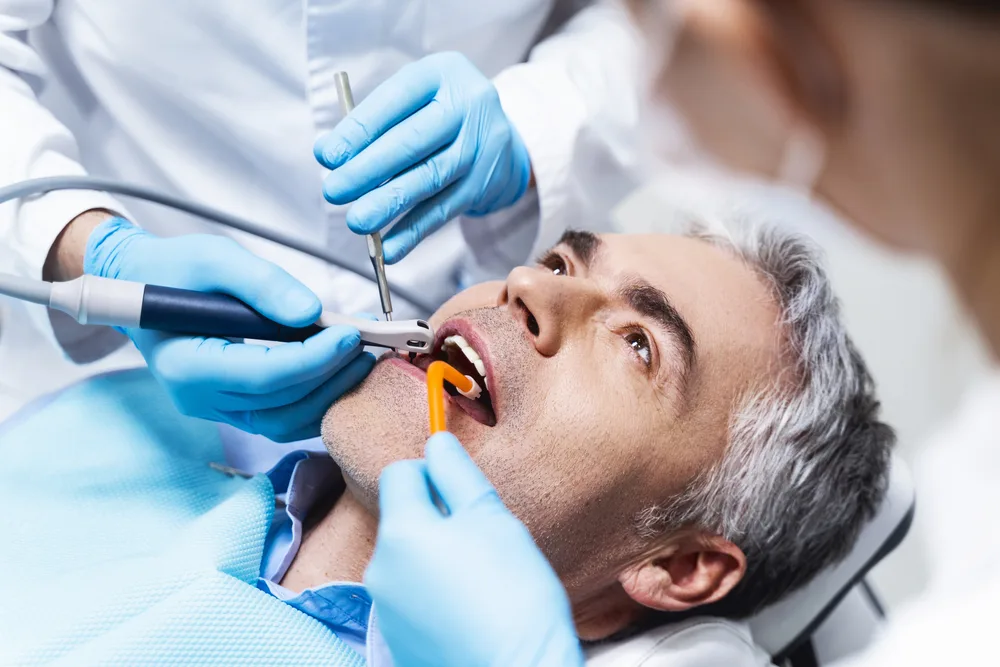
A dental X-ray shows what an examination cannot: decay between teeth, infection at the tip of a root, the bone around teeth and implants, and teeth that have not come through. There are three types you are likely to hear about, the small IOPA, the full-mouth OPG and the 3D CBCT scan, and each one answers a different question.
This guide explains what each type shows, when it is used, how much radiation it involves and what to expect on the day.
At our Anandbagh clinic: digital X-rays, full-mouth OPG, lateral cephalograms and 3D CBCT scans are all taken in the clinic. You can also come in just for an X-ray or a CBCT scan, including when another dentist has referred you.
IOPA, OPG and CBCT at a Glance
| IOPA (small X-ray) | OPG (full-mouth X-ray) | CBCT (3D scan) | |
|---|---|---|---|
| Shows | One to three teeth and their roots | All the teeth and both jaws in one picture | Teeth and bone in three dimensions |
| Common uses | Toothache, root canals, a single implant | Wisdom teeth, braces planning, an overall check | Implant planning, teeth near a nerve, difficult root canals |
| How it is taken | A small sensor held inside the mouth | You stand still while the machine moves around your head | Like an OPG, with the machine taking many images as it turns |
| Typical dose | 0.005 mSv, about 1 day of natural background radiation | 0.025 mSv, about 3 days | 0.18 mSv, about 22 days, depending on the size of the scan |
Doses are typical adult values published by RadiologyInfo, the patient site of the Radiological Society of North America and the American College of Radiology. Actual doses depend on the machine and the area scanned.
IOPA (RVG): The Small Digital X-Ray
An IOPA (intra-oral periapical) X-ray shows one to three teeth from the crown to the root tip, and the bone around them. A small digital sensor, often called RVG, is placed inside the mouth, and the picture appears on screen within seconds.
It is commonly used to:
- find the cause of a toothache or a swelling
- check for decay between teeth or under an old filling
- plan, check and follow up a root canal
- check the bone around a single implant or a crowned tooth
OPG: The Full-Mouth X-Ray
An OPG, short for orthopantomogram and also called a panoramic X-ray, shows all the teeth, both jaws and the jaw joints in one wide picture. You stand still and bite gently on a small holder while the machine moves around your head; nothing else goes inside the mouth.
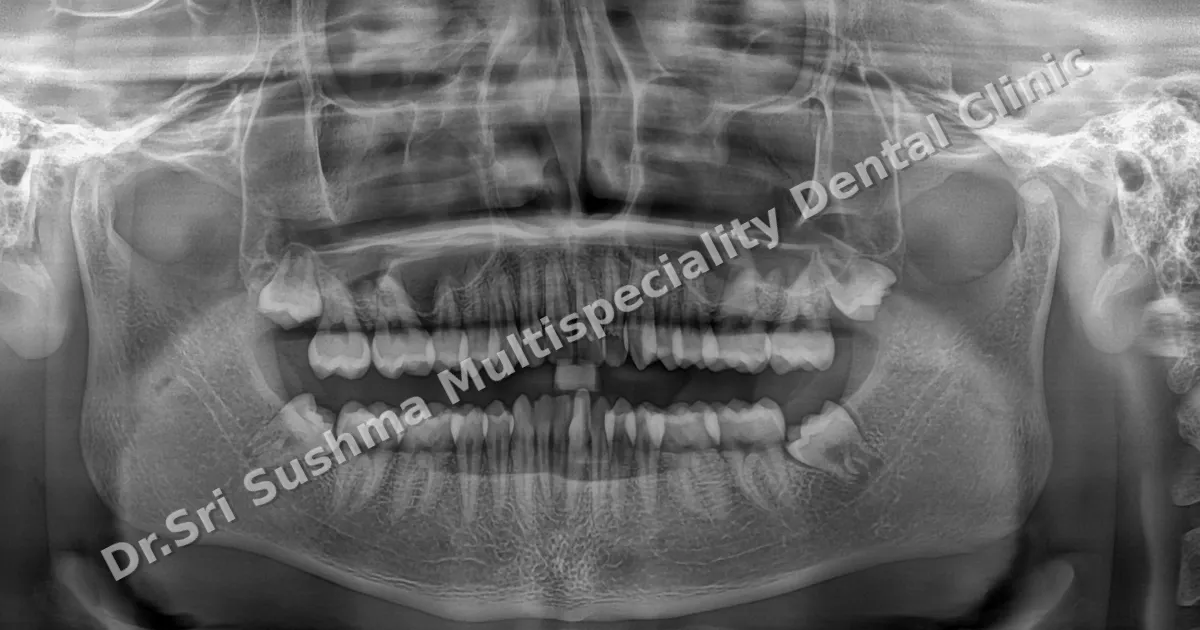
An OPG helps to:
- see wisdom teeth and whether they are impacted
- plan braces or clear aligner treatment
- check the overall condition of the teeth and bone at a first visit
- follow how a child’s adult teeth are developing
- look for cysts, fractures or other changes in the jaws
An OPG shows less detail of a single tooth than an IOPA, so your dentist may ask for both.
CBCT: The 3D Dental Scan
CBCT stands for cone beam computed tomography. The machine turns around your head and takes many images, which software combines into a three-dimensional view. Your dentist can then look at the teeth and jaws from any angle and measure the height and width of the bone.
A CBCT scan is used when a flat X-ray cannot answer the question, for example to:
- plan dental implants: how much bone there is, and where the nerve and the sinus lie
- check how close a wisdom tooth is to the nerve before it is removed
- find extra canals, cracks or infection in a difficult root canal case
- examine cysts and other changes in the jaw bone
A CBCT scan involves more radiation than an OPG, so the American Dental Association advises taking one only after a dentist judges that it will help your treatment. A scan of a small area needs less radiation than a scan of both jaws.
Lateral Cephalogram: The Side-View X-Ray for Braces
A lateral cephalogram, often called a ceph, is an X-ray of the head taken from the side. It shows how the upper and lower jaws, the teeth and the profile of the face line up with each other.
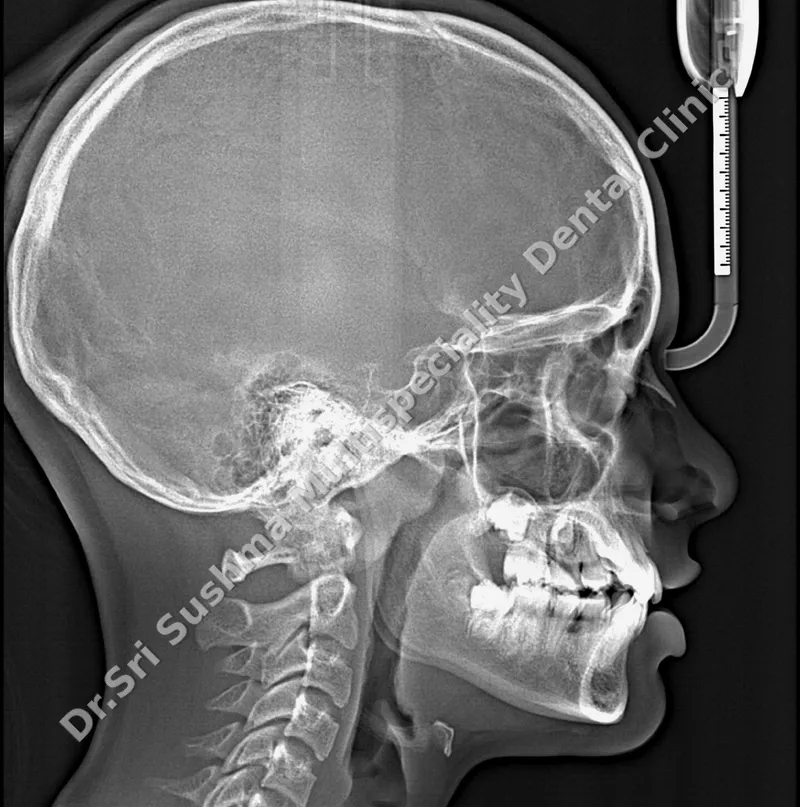
Orthodontists take measurements from it to plan braces or clear aligners, especially when the jaws do not meet as they should, and sometimes to check progress during treatment. You stand still with two small ear rods keeping your head in position; nothing goes inside the mouth.
Are Dental X-Rays Safe?
Dental X-rays use low doses of radiation. According to RadiologyInfo, a small dental X-ray gives about the same dose as one day of natural background radiation, an OPG about three days, and a CBCT scan about 22 days.
Dentists follow the ALARA principle, “as low as reasonably achievable”: every X-ray should have a clear reason, and the dose should be kept as low as possible. Digital sensors need less radiation than old film X-rays. The American Dental Association also no longer recommends lead aprons or thyroid collars for dental X-rays, because they can block the part of the picture the dentist needs and lead to a repeat X-ray.
Dental X-Rays During Pregnancy
The American Dental Association considers dental X-rays safe at any stage of pregnancy, and says that delaying necessary dental treatment can lead to more complex problems. Tell us if you are pregnant, or might be, so that only the X-rays you need are taken.
X-Rays for Children
Children may need X-rays more often than adults, because their teeth and jaws are still developing. X-ray settings should be adjusted for a child’s size; the American Dental Association supports the Image Gently campaign to “child-size” X-rays. See our children’s dentistry page for more on dental care for children.
How Often Do You Need Dental X-Rays?
There is no fixed interval. The American Dental Association says it depends on your oral health, your age, your risk of disease and any symptoms. Someone with frequent cavities or gum disease may need X-rays more often than someone with healthy teeth and no symptoms.
Can I Come In Just for an X-Ray or a CBCT Scan?
Yes. You can come to the clinic only for a dental X-ray, an OPG or a CBCT scan, for example when your own dentist has asked for one. Bring any referral note and earlier X-rays if you have them: they show what your dentist needs and can save you a repeat X-ray.
The type of X-ray is chosen so that it answers your dentist’s question with the least radiation.
What Does a Dental X-Ray Cost?
The fee depends on the type of X-ray, a small IOPA, a full-mouth OPG or a 3D CBCT scan, and for CBCT, on how large an area needs to be scanned. We don’t publish prices on this website; call or WhatsApp the clinic for the current fee for the scan you need.
How to Prepare for an OPG or a CBCT Scan
- Remove earrings, nose pins, necklaces, hairpins, spectacles and any removable denture or brace, because metal shows up on the picture.
- Tell us if you are pregnant, or might be.
- Keep still while the machine moves; the scan doesn’t hurt.
- Young children may need some help to keep still.
Frequently Asked Questions
What is the full form of OPG?
OPG stands for orthopantomogram. It is also called an OPT or a panoramic X-ray: one wide picture that shows all the teeth and both jaws.
Is an OPG or a CBCT scan better?
Neither is better in general, because they answer different questions. An OPG gives a flat overview of all the teeth and jaws with a low dose. A CBCT gives a 3D view of a chosen area and is used when that extra detail will change the treatment plan, such as for implants or a tooth close to a nerve.
Does a dental X-ray hurt?
No. A small X-ray sensor in the mouth can feel a little awkward for a few seconds, and an OPG or a CBCT scan only needs you to stand or sit still while the machine moves around your head.
Can a dental X-ray be taken during pregnancy?
Yes, when it is needed. The American Dental Association considers dental X-rays safe at any stage of pregnancy. Tell the dentist that you are pregnant, or might be, so that only the X-rays you need are taken.
Will an X-ray show whether I need a root canal?
A small IOPA X-ray can show deep decay close to the nerve and infection around the root tip, which help the dentist decide. The decision also depends on your symptoms and tests on the tooth, not on the X-ray alone.
Why do I need a CBCT scan before a dental implant?
A CBCT scan shows the height and width of the bone and where the nerve and the sinus lie, which a flat X-ray cannot show in full. This helps plan the size and position of the implant.
Dental X-Rays and CBCT Scans Near Anandbagh
Dr.Sri Sushma Multispeciality Dental Clinic is in Anandbagh, Moula Ali, close to Malkajgiri, Safilguda, Neredmet and ECIL. Digital X-rays, OPG and CBCT scans are taken in the clinic, which is open every day, 9AM – 9PM.
Sources
- RadiologyInfo.org (Radiological Society of North America and American College of Radiology). Radiation dose, last reviewed 15 April 2025: typical doses for a dental X-ray, a panoramic X-ray and a cone beam CT scan.
- American Dental Association. Dental radiographs: the ALARA principle, how often X-rays are needed, CBCT, digital sensors and thyroid collars.
- American Dental Association. Pregnancy: dental X-rays and treatment during pregnancy.
- MouthHealthy (American Dental Association). X-rays: shielding, and why children may need X-rays more often.
Digital X-rays, OPG and 3D CBCT in the clinic · Open 365 days a year · 9AM – 9PM