Missing a Tooth?
What Happens If You Don't Replace It?
Losing a tooth can feel like a problem only if the gap is visible when you smile. If the missing tooth is at the back of the mouth, it is easy to think:
"I can still eat. Do I really need to replace it?"
Sometimes the answer may actually be no. Wisdom teeth, for example, normally do not need replacement after extraction. Teeth removed intentionally during orthodontic treatment are another exception.
But when a functional tooth is lost because of decay, gum disease, fracture or trauma, leaving the space untreated can gradually affect the teeth around it, your bite and the bone that once supported the tooth.
Key point: A missing tooth is not only an empty space. Teeth work as part of a complete bite. When one disappears, neighbouring teeth, the opposing tooth and the supporting jawbone can gradually adapt to that change.
What Happens Immediately After Losing a Tooth?
If a tooth is extracted, the socket initially fills with a blood clot and begins healing. Gum tissue gradually closes over the area, while the bone underneath begins remodelling.
At first, you may notice very little difference once the extraction has healed — particularly if the missing tooth is a molar that is not visible in your smile.
The important changes often happen gradually rather than immediately.
What Can Happen If a Missing Tooth Is Not Replaced?
| Possible Change | Why It Happens | Possible Effect |
|---|---|---|
| Neighbouring teeth move | Teeth beside the gap may tilt or drift into the empty space | Bite changes and harder-to-clean areas |
| Opposing tooth moves | A tooth without normal contact may gradually move toward the gap | Altered bite and future restoration difficulty |
| Jawbone reduces | The bone no longer receives normal stimulation from the missing tooth root | Less bone may be available for a future implant |
| Chewing shifts | You may unconsciously chew more on the opposite side | Uneven loading of remaining teeth |
| Appearance changes | Front-tooth gaps are immediately visible and multiple missing teeth can reduce facial support | Changes in smile and facial appearance |
1. Nearby Teeth Can Drift Into the Gap
Teeth are not permanently locked in one position. They are supported by bone and periodontal tissues and can move slowly when forces around them change.
After a tooth is lost, the teeth beside the gap may gradually tilt or drift toward the empty space.
This can create:
- Uneven spacing
- New food-trapping areas
- Changes in tooth contact
- Difficulty cleaning between tilted teeth
- A less stable bite
If significant movement occurs, replacing the tooth later may become more complicated because the original space is no longer available.
2. The Opposing Tooth Can Move Toward the Empty Space
Every chewing tooth normally contacts a tooth in the opposite jaw. This contact helps maintain its position.
If the opposing tooth disappears, the remaining tooth can sometimes gradually move farther out of its socket toward the empty space. Dentists call this over-eruption or supra-eruption.
Significant movement can interfere with your bite and reduce the available space for a future implant, bridge or other restoration.
3. Bone Begins Changing After Tooth Loss
The roots of natural teeth transfer normal chewing forces into the surrounding jawbone.
Once a tooth and its root are gone, that area no longer receives the same stimulation. The body gradually remodels the unused bone, and the ridge can become narrower or shorter over time.
This matters particularly if you are considering a dental implant, because an implant needs enough healthy bone for stable placement.
Losing bone does not mean an implant will become impossible. Bone-grafting procedures can often rebuild deficient areas, but additional treatment may make the process longer and more complex.
4. Chewing Can Become Uneven
Losing one tooth does not usually mean you suddenly cannot eat. Instead, many patients unconsciously begin chewing more on the opposite side.
Over time, the remaining teeth may take more of the workload that was previously shared across the full dental arch.
The effect becomes more noticeable when several teeth are missing, particularly molars that normally handle much of the grinding and chewing force.
5. Missing Front Teeth Can Affect Speech and Appearance
Front teeth do more than create a smile. They also help guide the lips and tongue during speech and support the appearance of the lips.
Losing an anterior tooth can therefore affect:
- Smile appearance
- Pronunciation of certain sounds
- Lip support
- Confidence while speaking or smiling
Because front-tooth loss is highly visible, temporary replacement may sometimes be planned while a long-term restoration is being prepared.
6. Multiple Missing Teeth Can Affect Facial Support
The effect of one missing tooth is very different from the effect of losing many or all teeth.
When several teeth are missing, chewing efficiency reduces and the lips and cheeks receive less support from the dental arches.
Long-term loss of teeth and supporting bone can therefore influence facial appearance as well as oral function.
Does Every Missing Tooth Need to Be Replaced?
No — and this is an important distinction.
Replacement may not be necessary in situations such as:
- Removal of wisdom teeth
- Teeth intentionally extracted as part of orthodontic treatment
- Selected cases where the bite remains stable and the missing tooth has little functional impact
- Situations where medical or anatomical factors make treatment inappropriate
The decision should therefore be based on the entire mouth rather than a simple rule that every gap must automatically be filled.
How Soon Should You Replace a Missing Tooth?
There is no universal deadline.
Some teeth can be replaced immediately after extraction in carefully selected implant cases. In other situations, the socket needs time to heal before definitive treatment begins.
What is useful, however, is to discuss replacement before or soon after extraction.
Early planning gives your dentist an opportunity to evaluate:
- How much bone is present
- Whether the extraction site should be preserved
- The condition of neighbouring teeth
- Your bite
- Whether an implant, bridge or denture is appropriate
- Whether temporary replacement is needed
Waiting does not automatically make treatment impossible, but changes in bone and tooth position can sometimes make later replacement more complicated.
What Are the Main Ways to Replace a Missing Tooth?
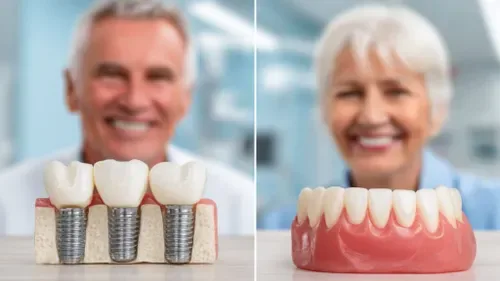
The three main categories are dental implants, fixed bridges and removable dentures.
This article focuses on the consequences of tooth loss rather than repeating a full treatment comparison. If you want a direct side-by-side analysis, read our dental implants vs dentures vs bridges guide.
Dental Implant
A dental implant replaces the missing tooth root with a biocompatible implant placed in the jawbone. After healing, an abutment and dental crown are attached above it.
One important advantage is that a single implant does not require neighbouring healthy teeth to be cut down for support.
Implants can be used for:
- One missing tooth
- Several missing teeth using implant-supported bridges
- Full-arch tooth replacement using implant-supported restorations
Learn more about dental implant treatment.
Fixed Dental Bridge
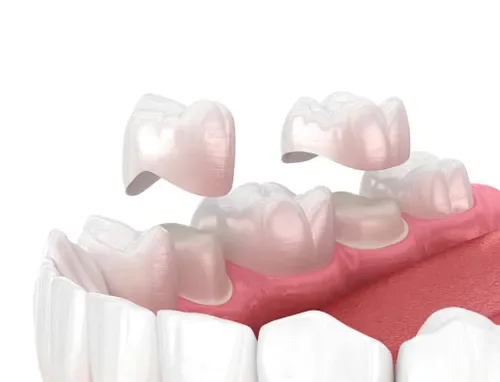
A conventional bridge replaces the missing tooth with an artificial tooth supported by crowned teeth on either side of the gap.
A bridge may be particularly useful when:
- Implant surgery is not appropriate
- The patient prefers a nonsurgical fixed option
- The neighbouring teeth already require crowns or major restorations
Your existing teeth need to be evaluated carefully before using them as bridge supports.
Read our complete guide to dental crowns and bridges.
Removable Partial or Complete Dentures
Dentures can replace several missing teeth or an entire arch.
A partial denture uses the remaining teeth and gums for support, while a complete denture replaces all teeth in an upper or lower jaw.
They may be a practical option when several teeth are missing or when fixed implant treatment is not suitable or preferred.
See our dentures treatment page for the different types available.
Can a Crown Replace a Missing Tooth?
This is an area that often causes confusion.
A dental crown by itself cannot replace a completely missing tooth.
A crown is a restoration that needs something underneath it for support.
For a missing tooth, a crown may be used in two ways:
- A crown is attached to a dental implant that replaces the missing root
- Crowns on neighbouring teeth form part of a fixed dental bridge
If the natural tooth is still present but badly damaged, a crown may restore it instead of removing and replacing it.
Learn more on our crowns and bridges treatment page.
One Missing Tooth vs Several Missing Teeth
The number and location of missing teeth have a major influence on treatment planning.
| Situation | Common Options |
|---|---|
| One missing tooth | Single implant or fixed bridge |
| Several teeth missing together | Implant-supported bridge, conventional bridge in selected cases or partial denture |
| Several gaps throughout the mouth | Multiple implants, implant-supported restorations or partial denture |
| All teeth missing | Complete dentures or implant-supported full-arch teeth |
What Is the Best Replacement for One Missing Tooth?
There is no single answer that is best for everybody.
A single implant is often attractive because it replaces the root as well as the visible tooth without requiring preparation of neighbouring teeth.
But a bridge can be a sensible alternative when the adjacent teeth already require crowns or when implant surgery is not appropriate.
The decision depends on:
- Available jawbone
- Gum health
- Condition of adjacent teeth
- Bite forces
- General health
- Treatment time
- Budget
- Patient preference
Why Saving the Natural Tooth Still Comes First
Tooth replacement technology is excellent, but a replacement is not automatically better than a healthy natural tooth.
When a tooth can predictably be saved with appropriate treatment, preserving it should usually be considered before extraction.
Depending on the problem, treatment might involve:
- A filling
- Root canal treatment
- A dental crown
- Gum treatment
- Repair of a fractured tooth
Extraction becomes appropriate when the tooth cannot be predictably restored, periodontal support is severely compromised, infection cannot be controlled or removal forms part of a planned treatment.
What If the Tooth Was Lost Years Ago?
It may still be possible to replace it.
The dentist will assess:
- How much space remains between neighbouring teeth
- Whether teeth have tilted into the gap
- Bone height and width
- The position of the opposing tooth
- Gum health
- Your overall bite
Dental X-rays or 3D imaging may be recommended when implant treatment is being considered.
If the bone has reduced significantly, bone grafting may sometimes be needed before or together with implant placement.
How Can You Prevent Future Tooth Loss?
Many adult teeth are lost because of advanced decay or periodontal disease — problems that often develop gradually.
- Brush twice daily with fluoride toothpaste
- Clean between the teeth every day
- Have tartar removed professionally when needed
- Do not ignore bleeding gums
- Treat cavities before they reach the dental nerve
- Wear a mouthguard for contact sports
- Seek early treatment for cracked or broken teeth
- Avoid smoking and tobacco
- Attend regular dental examinations
If your gums bleed regularly, see our guide to bleeding gums.
Frequently Asked Questions
What happens if I don't replace a missing tooth?
Depending on the location of the gap, neighbouring teeth can gradually drift or tilt, the opposing tooth may move toward the space, chewing may become less balanced and the supporting jawbone can gradually reduce.
Does every missing tooth need replacing?
No. Wisdom teeth do not normally require replacement, and some teeth are intentionally removed as part of orthodontic treatment. Other situations need individual assessment based on your bite, tooth position and function.
How soon should I replace a missing tooth?
The ideal timing depends on why the tooth was lost, the condition of the extraction socket and the treatment selected. Early assessment is useful even when the final replacement will be placed later.
Can my teeth move because one tooth is missing?
Yes. Teeth next to an untreated gap may gradually tilt or drift, although the amount of movement varies between patients.
Can I get an implant years after losing a tooth?
Often, yes. The available bone and space need to be assessed first. If significant bone loss has occurred, bone grafting may sometimes be required before or during implant treatment.
Can a crown replace a missing tooth?
Not by itself. A crown needs support underneath it. It can be fixed to an implant, or crowns can support a dental bridge that replaces the missing tooth.
Which is better: an implant, bridge or denture?
Each option has different advantages. Implants preserve adjacent teeth and replace the root, bridges provide a fixed nonsurgical option, and dentures can efficiently replace multiple teeth. Your bone, remaining teeth, health, budget and preferences all influence the best choice.
Missing Tooth Assessment in Anandbagh, Hyderabad
At Dr. Sri Sushma Multispeciality Dental Clinic in Anandbagh, we assess the entire bite before recommending how — or whether — a missing tooth should be replaced.
Depending on your situation, options can include dental implants, fixed bridges, partial dentures, complete dentures or implant-supported restorations.
We serve patients from Anandbagh, Moula Ali, Malkajgiri, Sainikpuri, AS Rao Nagar, ECIL and nearby areas of Hyderabad and Secunderabad.
- Complete missing-tooth and bite assessment
- Digital X-rays when required
- CBCT 3D implant planning when indicated
- Single-tooth and multiple-tooth replacement planning
- Dental implants, bridges and dentures available
- Open 9AM–9PM, 365 days a year
Find out whether it needs replacement and which option suits you · Open 9AM–9PM · 365 days a year