Does Teeth Scaling Damage Enamel?
Myths, Benefits & How Often to Clean
One of the most common reasons people postpone professional cleaning is the belief that scaling “scrapes away enamel,” creates gaps or makes teeth loose. These concerns usually come from how the mouth feels after heavy tartar has finally been removed.
Professional scaling is intended to remove plaque, hardened tartar and selected surface deposits from the tooth — not to grind away healthy enamel.
Quick answer: proper dental scaling does not create periodontal disease or make healthy teeth loose. If gaps, longer-looking teeth or mobility become obvious after cleaning, tartar and swollen gums may previously have been hiding an existing gum problem.
What Does Scaling Actually Remove?
Plaque is a soft bacterial film. If it mineralises, it becomes tartar or calculus — a hard deposit that bonds to tooth surfaces and cannot be removed with normal brushing.
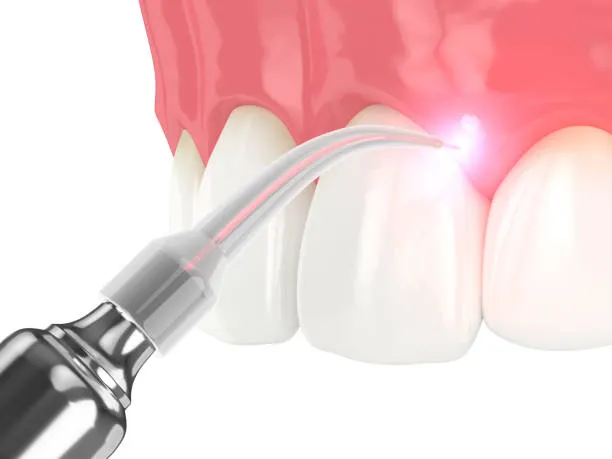
Ultrasonic scalers use rapid vibrations and water flow to break tartar away from the tooth surface. Hand instruments may be used for fine deposits or specific root areas.
Myth 1: “Scaling Removes Enamel”
Enamel is much harder than tartar. Dental instruments are used with controlled technique to remove deposits from the tooth surface. Professional scaling performed correctly is not designed to thin enamel.
Myth 2: “Scaling Creates Gaps Between Teeth”
Heavy tartar can fill spaces between teeth. Inflamed gums can also become swollen and cover part of those spaces. After the tartar is removed and swelling decreases, a pre-existing space may become visible.
The cleaning did not create the underlying bone or gum loss; it revealed the true tooth and gum contour.
Myth 3: “Scaling Makes Teeth Loose”
Tartar can sometimes form a hard bridge around already compromised teeth. Once it is removed, existing mobility may be easier to notice. The real cause is loss of periodontal support, not the cleaning itself.
Why Do Teeth Feel Sensitive After Scaling?
Temporary sensitivity can occur when tartar that covered root surfaces is removed or when swollen gums shrink during healing. The newly exposed area may react to cold for a short period.
Persistent or severe sensitivity should be assessed because recession, decay or worn root surfaces may need additional treatment.
What Are the Benefits of Professional Scaling?
- Removes tartar that brushing cannot remove
- Reduces plaque-retentive rough deposits
- Supports prevention and treatment of gingivitis
- Helps control bad breath when plaque and tartar are contributing
- Makes it easier to maintain healthy gums at home
- Allows the dentist to see tooth and gum surfaces more clearly
- Can remove some external stains from tea, coffee or tobacco
Scaling Does Not Replace Whitening
Cleaning can make teeth look brighter by removing external deposits, but it does not bleach the internal colour of enamel. Professional whitening is a separate cosmetic treatment.
How Often Should Teeth Be Scaled?
Frequency should be based on risk. Some people build tartar quickly, while others have very little. Patients with a history of periodontal disease may need professional maintenance more often than healthy low-risk patients.
Your interval should be decided after examining plaque levels, gum bleeding, pocket depths, medical risk factors and previous gum disease.
Routine Scaling vs Deep Cleaning
If gum disease has created deeper pockets, a routine cleaning may not be enough. Scaling and root planing treats deposits below the gum line. See our scaling vs deep cleaning guide for the distinction.
What Should You Do After Scaling?
- Brush gently with a soft toothbrush
- Continue cleaning between the teeth
- Use desensitising toothpaste if recommended
- Avoid very hot or cold foods temporarily if sensitive
- Follow gum-treatment instructions if periodontitis was diagnosed
Why This Article Is Separate From the Deep-Cleaning Guide
This page targets the questions people ask before routine scaling — “Will it damage my enamel?”, “Will it create gaps?” and “Why do teeth feel loose afterwards?” The deep-cleaning article focuses on treatment selection for periodontal disease, so the two pages serve different search intent.
Frequently Asked Questions
Can scaling make enamel thin?
Professional scaling is designed to remove plaque and hardened deposits from tooth surfaces. It is not intended to thin healthy enamel.
Why do I see spaces between teeth after cleaning?
Tartar and swollen gums may have been filling or covering existing spaces. Once deposits are removed and inflammation reduces, the true tooth and gum contour can become more visible.
Why are my teeth sensitive after scaling?
Exposed root surfaces and reduction of gum swelling can temporarily increase sensitivity. Persistent or severe sensitivity should be reviewed.
Does scaling whiten teeth?
Scaling can remove some external stain and tartar, making teeth look cleaner or brighter, but it does not chemically bleach the natural tooth colour.
How often should teeth be scaled?
There is no single interval for everyone. The frequency depends on tartar buildup, gum health, periodontal history, smoking, medical risk and home cleaning.
Professional Teeth Cleaning in Anandbagh
At Dr. Sri Sushma Multispeciality Dental Clinic in Anandbagh, treatment is planned after a clinical examination rather than from symptoms alone. We serve patients from Anandbagh, Moula Ali, Malkajgiri, Sainikpuri, AS Rao Nagar, ECIL and nearby Hyderabad and Secunderabad areas.
Cleaning is matched to your gum condition. Healthy gums may need routine preventive scaling, while periodontal disease may require deeper treatment and closer review.
Get your gums and tartar level assessed first · Open 9AM–9PM · 365 days a year