Laser vs Traditional Dentistry:
Benefits, Limits & When Each Is Better
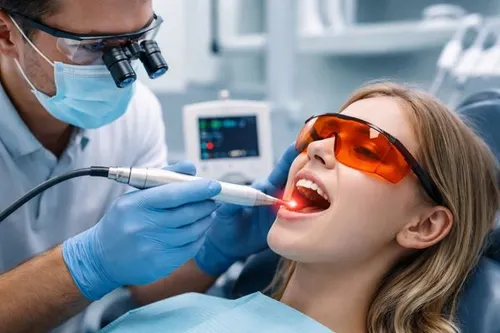
Laser dentistry is often marketed as if it replaces drills, scalpels and conventional dental surgery. In reality, both laser and traditional techniques have strengths, limits and situations where one is clearly more appropriate than the other.
The useful question is not “Which technology is newer?” It is “Which method gives the best result for this procedure?”
Bottom line: lasers can reduce bleeding, vibration and soft-tissue trauma in selected procedures. Traditional instruments remain essential for many restorations, bone procedures and complex surgical situations. Good dentistry often uses both.
Laser vs Traditional Dentistry: Quick Comparison
| Factor | Laser | Traditional |
|---|---|---|
| Noise / vibration | Usually less | Drills can create vibration and sound |
| Soft-tissue bleeding | Often reduced | May require pressure, cautery or sutures |
| Precision | Excellent for selected target tissues | Excellent with direct mechanical control |
| Speed | Efficient for suitable procedures | Often faster for extensive hard-tissue work |
| Cost | Can be higher | Often lower |
| Universality | Not suitable for every task | Broad range of established uses |
Gum Treatment: Laser or Conventional?
Lasers can remove or modify soft tissue with good haemostasis and may be useful as an adjunct in selected periodontal procedures. Conventional scaling and root planing remain fundamental because calculus needs to be mechanically removed from root surfaces.
Advanced periodontal defects may require flap access regardless of whether a laser is also used.
Gum Contouring
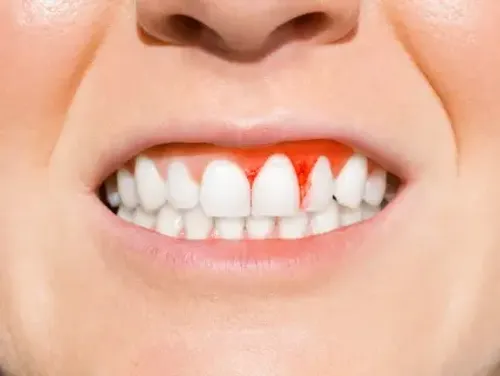
Laser contouring is well suited to many soft-tissue reshaping procedures because bleeding is controlled as the tissue is shaped. Conventional surgical techniques are still appropriate when deeper tissue or bone modification is required.
Cavity Treatment
Hard-tissue lasers can prepare selected cavities with less vibration. Traditional rotary instruments remain more practical for removing many existing fillings, preparing crowns and managing large or complex restorations.
Oral Surgery
Lasers can be useful for some soft-tissue biopsies, frenectomies and lesion removal. Tooth extraction, bone removal and many complex surgical procedures still rely on conventional surgical instruments.
Comfort and Anaesthesia
Laser treatment can reduce some sensory triggers, especially drill sound and vibration. That does not mean anaesthesia is never needed. Read our laser comfort and anaesthesia guide for a patient-focused explanation.
Healing and Recovery
Soft-tissue laser procedures can involve less bleeding and may require fewer sutures in selected cases. Recovery is still determined by how much tissue was treated. A large periodontal procedure is still a significant treatment even when a laser is involved.
What Are the Limitations of Laser Dentistry?
- Not every wavelength treats every tissue
- Some existing restorations cannot be removed efficiently with a laser
- Complex bone or tooth preparation may be better with conventional instruments
- Equipment cost can make treatment more expensive
- Operator training and case selection are critical
When Is Traditional Dentistry the Better Choice?
Conventional techniques are not outdated. They are precise, proven and often the best choice for crown preparation, extensive restorative work, tooth extraction, many bone procedures and situations where tactile mechanical control is important.
How Should a Patient Choose?
Choose the diagnosis and treatment plan first, then the instrument. If two methods can achieve the same predictable result, comfort, recovery, cost and personal preference can help decide.
How Is This Different From Our General Laser Guide?
Our existing laser dentistry guide explains what dental lasers can treat. This page is intentionally narrower: it compares laser and conventional methods procedure by procedure so the two articles do not compete for the same search intent.
Frequently Asked Questions
Is laser always better than a dental drill?
No. Lasers are useful for selected applications, while rotary instruments remain more efficient for many restorative procedures, crown preparation and removal of existing restorations.
Does laser dental treatment heal faster?
Some soft-tissue laser procedures can involve less bleeding and tissue trauma, but recovery depends on the size and depth of the treatment rather than the instrument alone.
Is laser treatment more expensive?
It can be, depending on the procedure, equipment and clinical time. Cost should be weighed against whether the laser provides a meaningful clinical or comfort benefit.
Can lasers replace gum surgery?
Sometimes laser-assisted therapy is useful, but advanced periodontal defects may still require conventional flap access for direct cleaning or regenerative treatment.
How do I know whether laser is suitable for me?
The dentist should explain the diagnosis, conventional alternative, expected benefit and whether using a laser changes the outcome, the recovery or mainly the treatment experience.
Choosing the Right Dental Technique in Anandbagh
At Dr. Sri Sushma Multispeciality Dental Clinic in Anandbagh, treatment is planned after a clinical examination rather than from symptoms alone. We serve patients from Anandbagh, Moula Ali, Malkajgiri, Sainikpuri, AS Rao Nagar, ECIL and nearby Hyderabad and Secunderabad areas.
We use laser technology where it improves precision, comfort or soft-tissue control, and conventional techniques where they remain the more predictable or efficient choice.
Ask which method actually fits your procedure · Open 9AM–9PM · 365 days a year